How to choose a washing machine: sizes, features and test data
A practical buyer’s guide: how to choose the size and capacity, how to read the energy label and care labels, what independent tests show about steam, “AI” and washer-dryers, and how to look after the machine.

In short
6 steps before buying
A practical summary – each step is explained further in the article.
- 1Measure the doorway and the niche: the depth including the door and room for hoses.
- 2The kilograms on the box refer to cotton; other programmes often take half as much.
- 3On the label compare kWh per 100 cycles, water and noise – not only the class letter.
- 4In tests steam did not remove stains better; “AI” is often load weighing under a new name.
- 5In tests powder washed stains and whites better, liquids – colours.
- 6EU rules require spare parts for 10 years; repair under guarantee extends the guarantee.
Washing machines in the 1Store.lv range: from about 200 € to 2300 €; LG is the best-selling brand (September 2026).
What this article is based on: who are Which?, Stiftung Warentest and other sources
Which?
UK consumer organisation; tests appliances in its own lab
Stiftung Warentest
German independent product testing institute
Consumer Reports
US non-profit consumer organisation with a test lab
CHOICE
Australian consumer organisation
Test-Achats
Belgian consumer organisation; survey in 9 EU countries
JRC, UBA
European Commission research centre and German Environment Agency
GINETEX
international association for textile care labelling (ISO 3758)
Verbraucherzentrale, Konsument
German consumer centre and Austrian consumer magazine
Woolmark
wool industry organisation; certifies machine wool cycles
“Which?” is the organisation’s name (with a question mark). Manufacturers’ claims are marked separately; all sources are listed at the end.
Start with your situation
Different situations call for different parameters. Here is what to compare and where to read more:
Small bathroom
A slim or compact machine; measure the doorway first (see “Sizes”).
Family of 3–4
Verbraucherzentrale: 7–8 kg; compare kWh per 100 cycles (see “Capacity”).
Allergies or kids
Stiftung Warentest advises a normal 60 °C programme with powder.
No room for a dryer
A washer-dryer or a dryer on top of the washer with the maker’s kit.
Studio flat
Compare the noise class (A–D) on the label; the machine must stand level.
Limited budget
In a CHOICE test a cheap machine washed better than an expensive one – check test results.
Sizes: will the machine fit?
Before buying, it is important to check that the machine fits through the door and into the niche. A standard washing machine is about 60 cm wide and 85 cm high, but the depth varies.
Three different depths
Body depth
59 cm
usually shown in catalogues
Including the door
63.6 cm
the real space in a niche
With the door open
107 cm
space in front of the machine
Example: Bosch WGG24409GB data sheet. Behind the machine you also need room for hoses – Beko recommends at least 15 cm. On 1Store.lv product pages we also show the depth with protruding parts where possible.
Standard
60 × 85 cm, depth 57–69 cm
standard sizes according to Stiftung Warentest
Slim
60 × 85 cm, depth under 55 cm
just as wide – shallower only in depth
Top-loader
40 cm wide
in our range – 40 × 90 × 60 cm
Compact
51 × 70 cm, depth 49 cm
in our range – Candy ProWash 700 Mini, 5 kg
Doors in Soviet-era flats
- In many older flats, including Soviet-era ones, bathroom doors are narrow. The clear opening without the leaf and hinges is even narrower – a 60 cm machine may not pass.
- Measure the clear opening in at least three places and take the smallest number; also check the corridor turns.
- If needed, the door leaf can be taken off. Move the machine upright.
- Before the first wash, always remove the transport bolts (Bosch, Miele).
Measure before buying
- the clear doorway and the corridor to the bathroom;
- the niche: width, height and depth including the door;
- room behind the machine for hoses (~15 cm) and room to open the door;
- where the water tap, drain and socket are – no extension cords.
Capacity: what the kilograms on the box mean
Under EU rules the rated capacity (e.g. 9 kg) refers to the eco 40-60 programme for cotton. For other programmes manufacturers state a smaller load – Which?: “sometimes less than half”. Example from the Bosch WGG24409GB (9 kg) manual:
Cotton, Eco 40-60
9 kg
Synthetics
4 kg
Mixed
4 kg
Delicates, silk
2 kg
Wool
2 kg
Quick, 15 min
2 kg
LG, Electrolux and Miele manuals are similar: about 3–4 kg for synthetics, 1–3 kg for wool and delicates.
How much people really wash
About 3.4 kg per cycle on average, although machine capacity in Europe grew from ~4.8 kg (1997) to ~7 kg (2013) (JRC).
Part loads
An almost empty machine uses nearly twice the water and more than twice the electricity per kg of laundry (Konsument).
How many kilograms
1–2 people manage with 5–6 kg, families with 7–8 kg (Verbraucherzentrale); Which?: 8 kg for an average household.
Duvets
For a winter duvet the drum should hold at least 7 kg (Stiftung Warentest); the duvet programme load is about 2.5–3 kg.
Care labels: 30 °C, hand wash and tumble drying
Many garments are labelled 30 °C, “hand wash” or “do not tumble dry”. The care symbols are set by the ISO 3758 standard, maintained by the international organisation GINETEX. What they mean:
Temperature is a maximum
The number in the tub is the highest allowed temperature. GINETEX: milder treatment and lower temperatures are always allowed.
Bars under the tub
One bar – milder mechanical action, two – very mild (e.g. wool). GINETEX advises a smaller load and short or no spin.
Hand wash
Up to 40 °C. GINETEX: washing machine manufacturers offer programmes that correspond to hand washing, e.g. for wool.
Tumble dryer
One dot – up to 60 °C, two – up to 80 °C, crossed out – do not tumble dry. Heat-pump dryers dry at lower temperatures (Which?).
- Wool in the machine: Stiftung Warentest – the machine’s hand-wash or wool programme washes gently and usually stresses wool less than washing by hand.
- Woolmark: the blue and green Woolmark marks mean the machine’s wool cycle is tested for hand-washable wool garments.
- 30 °C: for lightly soiled clothes 20–30 °C can be enough (Stiftung Warentest); for tough stains Which? advises 40 °C, for hygiene – 60 °C.
- Fewer creases: Stiftung Warentest advises a gentle programme, a smaller load and less spinning.
- EU rules: care labelling is not mandatory in the EU – only the fibre composition is (European Commission).
What to check on the machine: a wool or hand-wash programme (with Woolmark certification), a delicates programme, 20–30 °C programmes and adjustable spin speed.
How to read the energy label
Since March 2021 the EU energy label shows (Regulation 2019/2014):
A–G
Energy efficiency class
kWh
Electricity per 100 washes
kg
Capacity in the Eco 40-60 programme
h:min
Eco 40-60 programme duration
l
Water per wash
A–G
How dry the spin leaves laundry
A–D
Spin noise, dB
QR
Link to the EU EPREL database
- Why does Eco 40-60 take 3–4 hours? A lower temperature over a longer time saves electricity. EU rules allow up to 4 hours (240 minutes).
- All label data refer to the eco 40-60 programme. Electricity “per 100 washes” is calculated for full, half and quarter loads; at home people wash about 3.4 kg at a time on average (JRC).
- The class is not everything: Which? found A-rated machines that cost more to run than C-rated ones. Compare kWh per 100 cycles.
- Noise class refers to spinning: A – below 73 dB, D – 81 dB and more.
- Vibration depends most on installation: the machine must stand level on all four feet, ideally on concrete. On a wooden floor Miele recommends a plywood board fixed to the joists; Bosch – a water-resistant board of 30 mm or more.
More about energy classes – in a separate article soon.
Features: steam, “AI” and stain options
Manufacturers offer many extra features. Below – what they do according to manufacturers and what independent tests show.
Steam: what manufacturers promise and what tests show
Steam is an extra step at the start or end of a programme. Manufacturers recommend it for refreshing clothes, reducing creases and hygiene; the laundry is still washed by water and detergent.
Stains
Consumer Reports: stain removal was practically the same with or without steam.
Time and electricity
All 7 tested machines used more energy with steam (one almost 7 times as much), and for some the cycle got much longer.
Allergens and bacteria
Manufacturers promise up to 99.9 % fewer bacteria or allergens (Samsung, LG). These are manufacturer claims and self-commissioned tests; no independent comparison.
Creases
Manufacturers promise less ironing (e.g. Miele – up to 50 %). Independent tests have not checked this.
“AI” and smart features: what they do
The consumer organisation Which? concludes that “AI” in washing machines is often the same load weighing and sensors under a new name.
What it does
- weighs the load and adjusts the amount of water and time;
- LG AI DD detects the fabric type according to the manufacturer, for loads under 3 kg;
- Samsung AI Energy Mode: according to manufacturer data checked by the Carbon Trust, ~29 % less electricity (our calculation).
What to keep in mind
- Which? finds real machine learning in only a handful of tested models;
- savings figures are manufacturer data – there are no independent comparative tests;
- app support can be shorter than the machine’s life (about 11 years): Candy, Haier, Hoover promise at least 2 years, Miele about 10 (Which?).
In Which? tests quick programmes washed worse than the main programme and take only 1–2 kg of laundry.
Stain options
On some machines you can choose the type of stain – e.g. blood, grass or red wine. What manufacturers and tests say:
What the machine does
Bosch, Siemens, Miele: depending on the chosen stain it changes temperature, drum movement, soaking or prewash (manufacturer data).
Does the machine “see” stains
We found no manufacturer source for a machine that detects stains optically. Samsung AI Wash measures water turbidity – overall soiling.
Independent tests
Which? does not test stain programmes separately: it considers that a good machine should handle stains in the normal cottons programme.
What helps
For tough stains – 40 °C (Which?); pre-treat with detergent or stain remover (Consumer Reports); blood – in cold water (Which?).
Powder, liquid or pods
Results of independent tests (Which?, Stiftung Warentest, CHOICE):
Powder
Contains oxygen bleach
Stains
best
Whites
best
Colours
may bleach
Dosing
fully adjustable
Cost per wash
lowest
Liquid
No bleach
Stains
weaker
Whites
weaker
Colours
good
Dosing
fully adjustable
Cost per wash
medium
Pods
Handy, but fixed dose
Stains
weaker
Whites
weaker
Colours
good
Dosing
cannot change
Cost per wash
highest
- Auto-dosing (i-DOS, TwinDos etc.) works with liquid detergent. In the Which? lab all five machines washed worse with it than with manually added powder; 83 % of stains came out worse.
- The promised saving “up to 38 % detergent” is calculated against overdosing. In a 2025 study people on average dosed about 15 % less than recommended.
- Pods go straight into the drum, and the dose cannot be reduced. CHOICE: part of the recommended dose often washes just as well.
- Softener: Stiftung Warentest – colours fade faster, use as little as possible; CHOICE – towels absorb worse.
- Children: keep pods in a closed box out of children’s reach – the EU has special packaging rules for them.
Washer-dryer or a separate dryer
People choose a “two-in-one” machine when there is no room for a separate dryer. Most dry with a heater and a condenser; there are also heat-pump models that use less energy and no water for drying (CHOICE).
When it suits
- a small flat or bathroom with no room for two machines;
- a dryer cannot be stacked on top of the washer;
- 1–2 people, drying rarely or small loads;
- you want one appliance and one connection.
What to keep in mind
- usually dries only ~half of the washing capacity (CHOICE);
- dries worse than a separate dryer (Which?); in a test one programme took over 9 h (Stiftung Warentest);
- the condenser uses water – about 7.5 l per 1 kg of laundry (Which?);
- usually no fluff filter (some have one, e.g. heat-pump models): manufacturers advise wiping the drum and seal and running a cleaning programme.
If space allows, a separate dryer dries better and cheaper (Which?, CHOICE). A washer and dryer can be stacked in a column if the manufacturer offers a stacking kit. See tumble dryers.
Drum, tub and motor: what they are made of
Customers often ask about a “plastic” or “carbon” drum. In fact a washing machine has two parts:
Inner drum
Stainless steel
The drum that turns the laundry is stainless steel in practically all modern machines. Patterns (honeycomb, diamonds, waves) are manufacturers’ designs – we found no independent tests comparing them.
Practically the same everywhere
Outer tub
Plastic or composite
The tub that holds the water is usually plastic or composite (e.g. Carboran, Polinox), in some models steel. People often call it “carbon”. What matters more is whether the bearings can be replaced.
Ask: can bearings be replaced?
Motor
Direct drive or belt
An inverter direct-drive motor has no belt and no carbon brushes – brushes cause about 10 % of repairs (JRC). There is no proof that the machine as a whole lasts longer.
Ask: warranty terms
How long a washing machine lasts and how to look after it
According to studies and user surveys, a washing machine lasts about 12–14 years on average. Here is what the data show and what rights buyers have:
12 years
average life of a washing machine (survey in 9 EU countries)
Test-Achats, 2026
13.7 years
average age of discarded machines in Germany in 2013
UBA, Öko-Institut
> 10 %
of discarded machines were 5 years old or younger (2013)
UBA, Öko-Institut
78 %
of unrepaired machines were left unrepaired by the owner – often due to cost
JRC, 2019
What helps a machine last longer
- Spare parts: EU rules require them to be supplied for 10 years after the model is last sold, within 15 working days (models since March 2021).
- Right to repair: if a fault is fixed by repair, the legal guarantee is extended by 12 months (Directive 2024/1799).
- Motor warranty: e.g. LG in Latvia – 10 years on the Direct Drive motor; it covers the part, the owner pays for labour.
- Durability index: since April 2025 washing machines in France carry a durability and repairability score from 1 to 10.
What repair data show
- Sealed tub. Often, to replace the bearings you have to buy the whole unit with the drum, which costs almost as much as a new machine (JRC).
- More electronics. Electronics cause 14 % of faults, and only about half of them get repaired (JRC).
- The most common fault is the drum or bearings: 12 % of all faults (Which? survey, 2026).
- No proof of “built-in” failure (UBA). But the share of large appliances replaced within 5 years due to a defect rose from 3.5 % to 8.3 %.
How to clean a washing machine: programme, vinegar, citric acid
Bad smells come from a bacterial film building up inside – more often when washing at low temperatures and with liquid detergent (Miele, Stiftung Warentest). What testers and manufacturers advise:
- Once a month – an empty wash at 60 °C or more with heavy-duty powder (Stiftung Warentest, Verbraucherzentrale) or the manufacturer’s cleaning programme: LG Tub Clean, Samsung Eco Drum Clean, Bosch Drum Clean, AEG Machine Clean etc.
- Agent for the programme – follow the manual: Samsung advises Eco Drum Clean without any agent, Bosch and Miele – with powder or their own cleaner.
- After washing leave the door and the detergent drawer open to dry; regularly clean the filter, drawer and rubber seal.
- Vinegar: Verbraucherzentrale, Bosch and Which? advise against it – it can damage rubber seals and hoses. Some manufacturers (LG, Beko) mention it as an option.
- Citric acid: manufacturers disagree – Miele and AEG allow it, Bosch advises against it. Bosch and Miele: with correct detergent dosing, descaling is not needed.
- Soda: Verbraucherzentrale – does not help against limescale; Which? – too much can clog the filter and drawer.
Brands, owners and factories
Today many brands belong to a few large groups, and behind them stand families, foundations or collective enterprises. The EU does not require appliances to state where they were made – only the manufacturer and its address. In a Stiftung Warentest test two machines from the same factory performed differently in durability: a factory by itself does not tell you the quality.
BSH (Bosch Group)
Bosch, Siemens, Neff
Owner: the Robert Bosch foundation and the Bosch family (Germany); Siemens – under licence.
Washing machines: Łódź (Poland) and Nauen (Germany – until June 2027).
Electrolux Group
Electrolux, AEG, Zanussi
Owner: the Wallenberg family foundations (Sweden) – via the largest shareholder Investor AB.
Front-loaders: Porcia (Italy); slim Electrolux and Zanussi also at its own plant in Ivano-Frankivsk (Ukraine).
Haier Europe
Haier, Candy, Hoover
Owner: Haier Group (China) – a collective enterprise.
Main European plant – Eskişehir (Türkiye), also China. Candy washers are no longer made in Italy since 2025.
Hisense
Gorenje, Asko, Hisense
Owner: the Hisense group (China): employees, investors and the city of Qingdao (~27 %).
Hisense has owned Gorenje since 2018. Main European plant – Velenje (Slovenia).
Arçelik (Beko Europe)
Beko, Whirlpool, Indesit
Owner: the Koç family (Türkiye); it has owned 100 % of Beko Europe since 2026.
Also Grundig, Hotpoint, Bauknecht; Whirlpool – under licence. Washing machines: Türkiye, Romania, Poland.
LG Electronics
LG
Owner: the Koo family (South Korea) via LG Corp.
Washing machines for Europe are made near Wrocław (Poland).
Samsung Electronics
Samsung
Owner: the Lee family (South Korea) via Samsung group companies.
Washing machines for Europe are made in Wronki (Poland).
Miele
Miele
Owner: the Miele (51 %) and Zinkann (49 %) families (Germany).
By 2027 assembly moves to Ksawerów (Poland); washer-dryers – Gütersloh.
A common misconception. Beko, Whirlpool, Indesit and Hotpoint in Europe really are one group (Arçelik), but Candy and Hoover belong to Haier. Gorenje belongs to Hisense, not Haier: both companies come from Qingdao (China), but they have no shareholdings in each other. If the origin of a specific model matters to you – ask us.
Available now · in stock in Riga
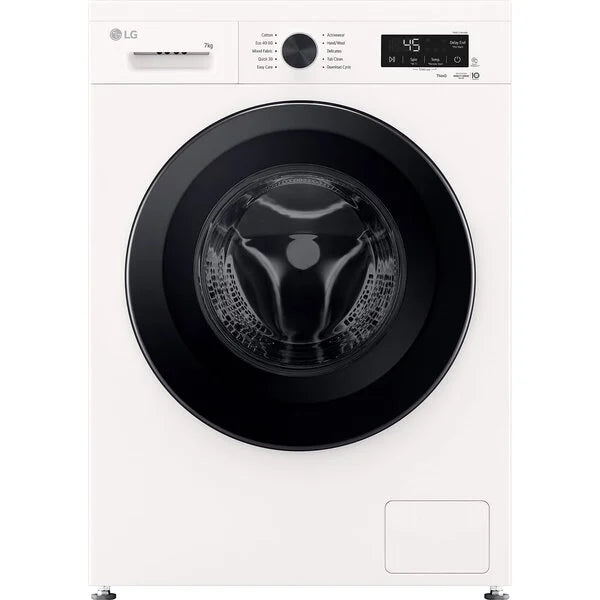
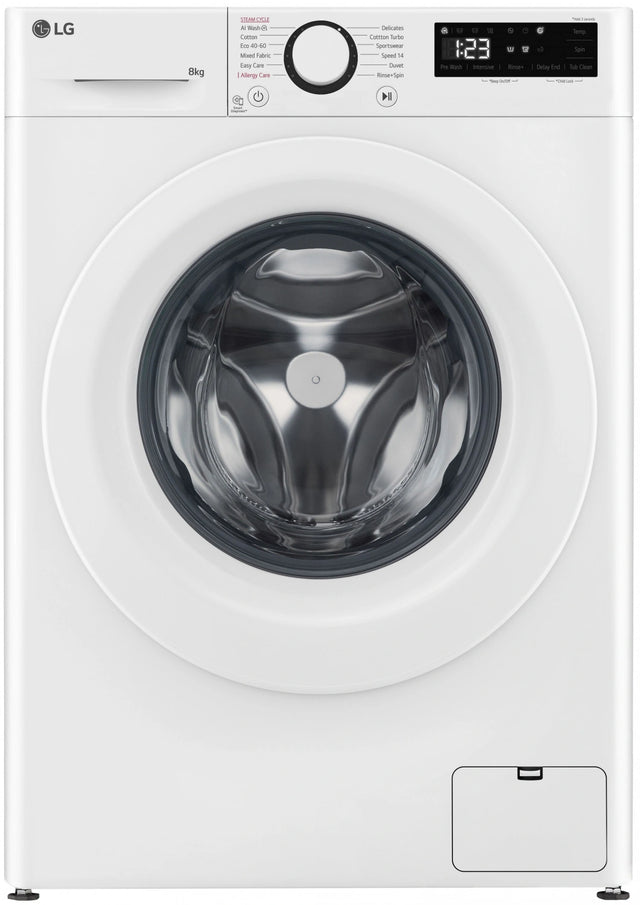
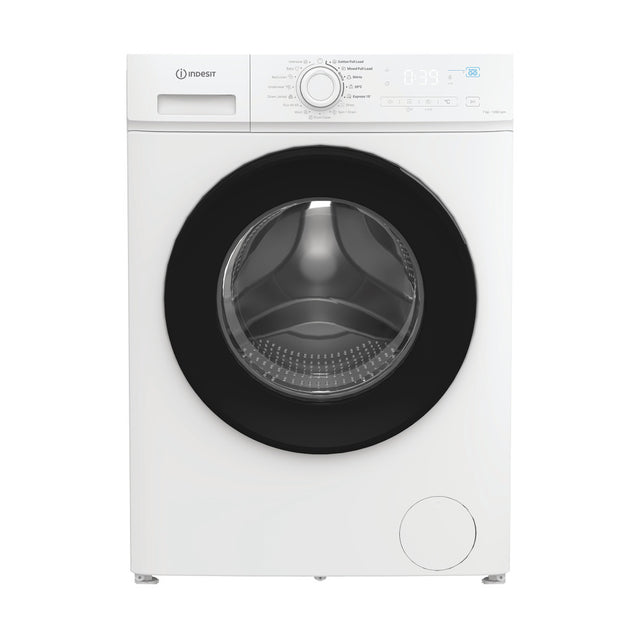
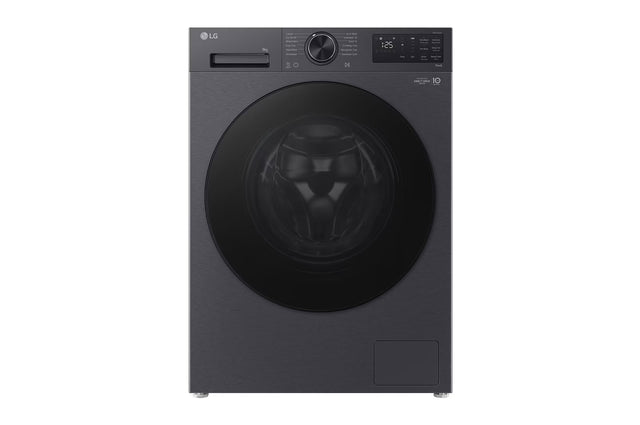
Best-selling washing machines available now
The most purchased models that are in our warehouse. Order on a working day by 17:00 and collect within 1 hour. The list updates automatically.
Available now · in stock in Riga
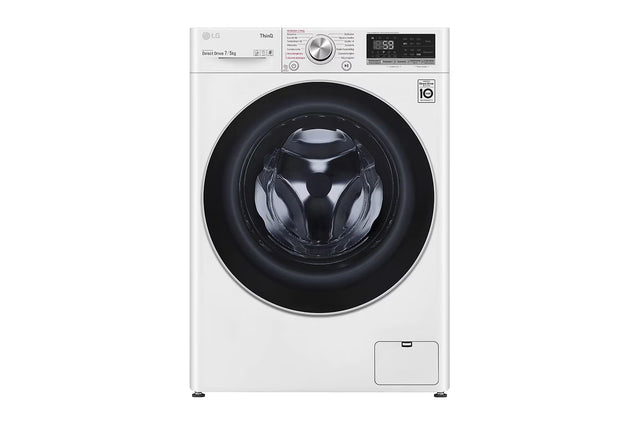
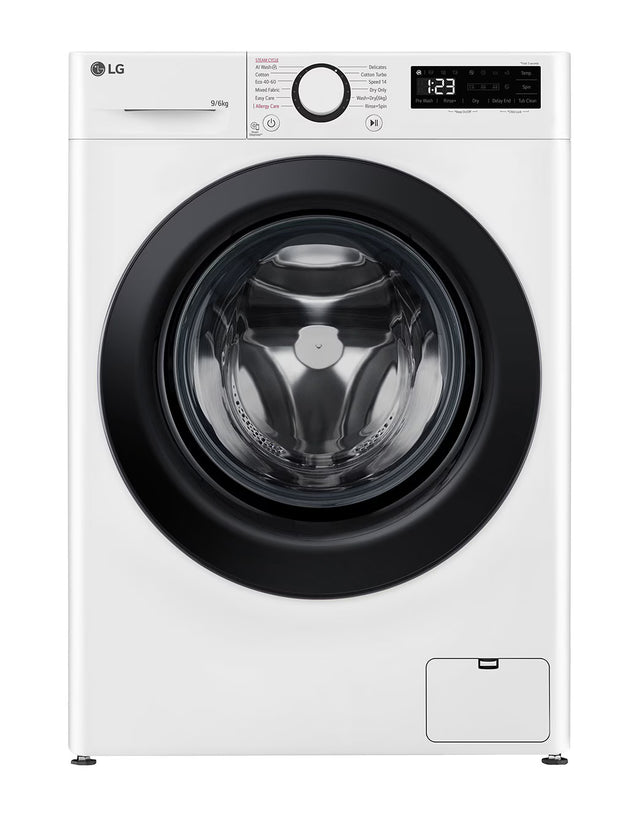
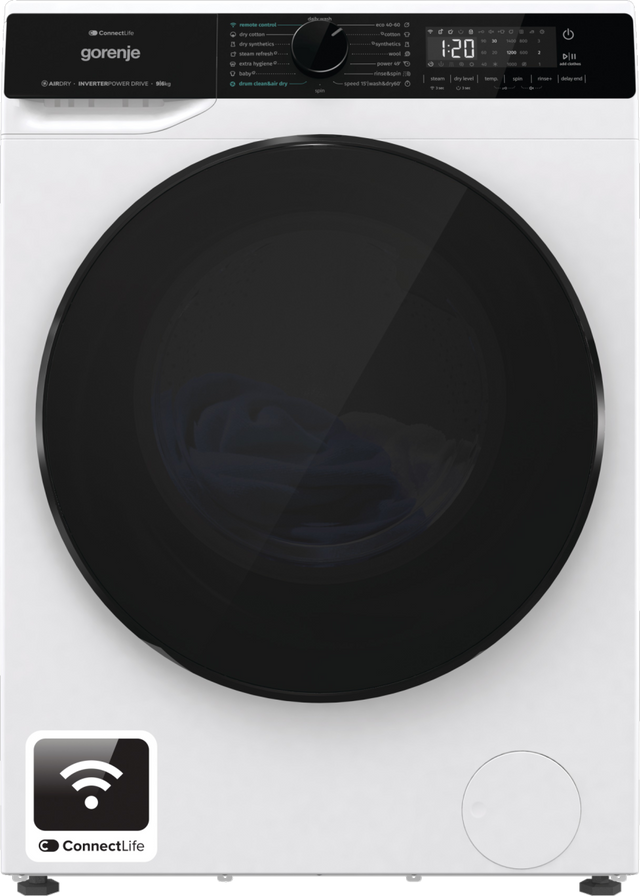
Washer-dryers available now
The most purchased models that are in our warehouse. Order on a working day by 17:00 and collect within 1 hour. The list updates automatically.
See all washing machines, washer-dryers and everything available now.
Delivery, connection and recycling of the old machine
- In Riga and the nearby area (up to 20 km) – washing machine delivery, carry-in with a lift, disconnecting and taking away the old one and connecting the new one: 60 € in total. See Installation and connection.
- Elsewhere in Latvia we deliver with DPD. See Delivery Terms.
- We take the old machine for recycling free of charge – see Recycling.
- Advice on WhatsApp +371 22059100.
Frequently asked questions
How do I know if the machine will fit?
Measure the clear doorway, the niche and the depth including the door, and leave ~15 cm for hoses. Compare with the product’s depth including protruding parts.
How deep is a slim washing machine?
Stiftung Warentest: a slim machine is less than 55 cm deep, a standard one 57–69 cm. Both are usually 60 cm wide and 85 cm high. Also compare the depth including the door.
What capacity does a family need?
Verbraucherzentrale: 5–6 kg for 1–2 people, 7–8 kg for families; Which?: 8 kg is enough for an average household. A winter duvet needs a machine of at least 7 kg (Stiftung Warentest).
Can you connect the new washing machine?
Yes. In Riga and the nearby area (up to 20 km) delivery, carry-in with a lift, taking away the old machine and connecting the new one cost 60 €.
Why is the machine 9 kg but wool takes only 2 kg?
Under EU rules the rated capacity refers to the eco 40-60 cotton programme. For other programmes manufacturers state a smaller load: e.g. Bosch WGG24409GB – 4 kg for synthetics, 2 kg for wool.
Can “hand wash” garments go in the machine?
GINETEX: washing machine manufacturers offer programmes that correspond to hand washing. Stiftung Warentest: a machine’s wool or hand-wash programme usually stresses wool less than washing by hand. Woolmark blue or green certification means the cycle is tested for such garments.
How to clean a washing machine – vinegar or citric acid?
Once a month – an empty wash at 60 °C or more with powder, or the manufacturer’s cleaning programme. Verbraucherzentrale, Bosch and Which? advise against vinegar (it can damage seals); manufacturers disagree on citric acid – check your manual.
Why does the Eco 40-60 programme take so long?
A lower temperature over a longer time saves electricity. The EU regulation allows up to 240 minutes, and all label data refer to exactly this programme.
Which is better – pods or powder?
In Which? tests powder (it contains oxygen bleach) washed stains and whites better, liquids and pods – colours. Pods cost more, and the dose cannot be changed.
Do I need a steam function?
In the Consumer Reports test stain removal with and without steam was the same, but energy use was higher. Manufacturers recommend steam for refreshing and creases.
Does a steam washing machine wash with steam?
No. Water and detergent wash the laundry; steam is an extra step at the start or end of the programme.
Does a washing machine recognise stains?
We found no manufacturer source for a machine that detects stains optically. Bosch, Siemens and Miele let you choose the stain type, and the machine changes temperature, drum movement and soaking. Samsung AI Wash measures water turbidity.
Is auto-dosing worth it?
In the Which? lab all five auto-dosing machines washed worse than with manually added powder. It works with liquid detergent.
Is a washer-dryer worth buying?
People choose one when there is no room for a separate dryer. In tests it usually dries only half of the washing capacity, and dries worse and at higher cost than a separate dryer (CHOICE, Which?).
Which drum is better – plastic or metal?
The inner drum is stainless steel in practically all machines. The outer tub is plastic or composite (often called “carbon”). What matters more is whether the bearings can be replaced.
How many years does a washing machine last?
In studies about 12–14 years on average: 12 years in a survey of 39,543 users in 9 EU countries (Test-Achats, 2026); machines discarded in Germany in 2013 were 13.7 years old on average (UBA). Early failures have become more common.
Were old washing machines more durable?
Partly. Modern machines often have a sealed tub and more electronics, so repairing bearings or electronics is often expensive. But studies have found no proof of deliberately “built-in” failures (UBA).
Are Beko, Whirlpool and Candy one company?
Partly. Beko, Whirlpool (in Europe under licence), Indesit and Hotpoint belong to Arçelik (the Koç family, Türkiye). Candy and Hoover belong to Haier (China). Gorenje belongs to Hisense, not Haier.
Which washing machine brand is the most popular?
According to 1Store.lv sales data (September 2026), 14 of the 20 best-selling washing machines are LG. Above 700 € – LG, Miele, Bosch and AEG (in that order).
Sources. This article uses data from independent testers, EU legislation and studies, as well as manufacturers’ technical descriptions (marked in the text as manufacturers’ claims). Updated in September 2026.
Show sources (114)
- Umweltbundesamt, Öko-Institut (2016) – Einfluss der Nutzungsdauer von Produkten
- Umweltbundesamt (2016) – Obsoleszenz-Studie: Zitate
- Tecchio, Ardente, Mathieux (2019), Journal of Cleaner Production – washing machine repairs
- JRC (2016) – Analysis of durability, reusability and reparability: washing machines
- JRC, Alfieri et al. (2018) – Durability assessment of washing machines
- Test-Achats (2026) – Washing machine reliability (39,543 respondents, 9 EU countries)
- Which? (2026) – Best washing machine brands (reliability survey)
- Stiftung Warentest (2025) – Waschmaschinen im Test
- European Commission – washing machine energy label and ecodesign
- EU Delegated Regulation 2019/2014 (energy label)
- EU Regulation 2019/2023 (ecodesign, spare parts, programme duration)
- EU Directive 2024/1799 (right to repair)
- Government of France (2025) – durability index for washing machines
- GINETEX – care symbols (ISO 3758)
- GINETEX – Textile care symbols (brochure)
- European Commission – Textile Regulation 1007/2011 FAQ (care labelling)
- A.I.S.E. – low-temperature washing
- Which? – Washing machine temperature guide
- Which? – Washing symbols explained
- Stiftung Warentest (2025) – Wollwaschmittel im Test
- Woolmark – certification levels
- Woolmark – washing wool in the machine
- Which? – Heat pump tumble dryers
- Which? – Which washing machine should you buy (capacity)
- Verbraucherzentrale – choosing a washing machine and consumption
- CHOICE – Washing machine capacity
- Konsument (2018) – Waschmaschinen im Test
- Stiftung Warentest (2019) – Bettdecken im Test
- JRC (2017) – washing machine ecodesign preparatory study
- Boyano, Espinosa, Villanueva (2019), Energy Efficiency – average load 3.4 kg
- Bosch – WGG24409GB instruction manual (programme loads)
- LG – F4X55 owner’s manual (programme loads)
- Bosch – Fleckenautomatik
- Siemens – iQ700 stainRemoval
- Miele – Stains option
- Samsung – Bespoke AI Wash (turbidity sensor)
- Which? – How to get rid of common stains
- AEG – washer-dryer care (fluff filter)
- Samsung – lint in a washer-dryer
- Siemens – WD14D361HK manual (fluff removal programme)
- LG – Tub Clean
- Samsung – Eco Drum Clean
- Bosch – laundry catalogue 2024 (Drum Clean)
- Miele – instruction manual (machine care)
- Which? – How to clean a smelly washing machine
- Which? – Washing machine cleaners compared
- Verbraucherzentrale – when the washing machine smells
- CHOICE – How to clean and maintain your washing machine
- Bosch – vinegar in the washing machine
- Bosch – descaling with citric acid
- Miele – instruction manual (descaling, odour)
- AEG – washing machine care
- LG – how to clean a washing machine
- Beko – how to clean a washing machine
- Consumer Reports – Steam setting on washing machines
- Which? – Smart washing machines explained
- LG – AI DD
- Samsung – Carbon Trust assurance statement (AI Energy Mode)
- Which? – How we test washing machines
- Which? – Useful washing machine programs
- CHOICE (2025) – Interesting things from our washing machine test
- HEA – Aufbau der Waschmaschinen (tub materials, motors)
- Which? – Auto-dosing test (2024, publ. 2025)
- Kimmel et al. (2025), Tenside Surfactants Detergents – dosing behaviour
- Which? – Laundry detergent test
- Stiftung Warentest – FAQ Waschmittel und Waschmaschine
- Stiftung Warentest – Weichspüler im Test
- CHOICE – Laundry products you may not need
- EU Regulation 1297/2014 (pod packaging, CLP)
- CHOICE – Washer-dryer combos
- Which? – Washer-dryer or separate machines
- Stiftung Warentest (2023) – Waschtrockner im Test
- Electrolux – fluff after drying in a washer-dryer
- LG Latvia – warranty (Direct Drive motor)
- Bosch – WGG24409GB data sheet (depths)
- Beko – washing machine sizes
- Candy – CW50-BP12307U1-S (dimensions)
- Miele – vibration during spinning
- Bosch – washing machine vibrates and moves
- European Parliament – origin marking on products
- BSH (2026) – closure of washing machine production in Nauen
- BSH – plants in Eastern Europe (Łódź)
- Electrolux Group – laundry brands
- Il Nord Est (2025) – Electrolux Porcia: washers and dryers
- Haier Europe – who we are
- Il Sole 24 Ore (2025) – Candy washing machine production in Italy ends
- Arçelik – shareholders (KAP, 2026)
- Whirlpool Corporation – 10-Q, Q2 2026 (sale of Beko Europe stake)
- Haier Smart Home – HKEX announcement (Haier Group – collective enterprise, ~34% of votes)
- Haier Smart Home – 2025 annual report (brands)
- Hisense – SZSE announcement (2020, no actual controller)
- Hisense Europe – Gorenje corporate governance
- Investor AB – stake in Electrolux Group (2026)
- Investor AB – ownership structure (Wallenberg foundations)
- Electrolux (2010) – plant in Ukraine (Ivano-Frankivsk)
- Ivano-Frankivsk region – Electrolux Ukraine (exports to the Baltics)
- BSH – company portrait (Bosch, Siemens licence)
- BSH Poland – plants in Łódź
- Bosch – ownership (Robert Bosch foundation)
- LG Electronics – shareholders (LG Corp 32%)
- Samsung Electronics – 2025 report (shareholders)
- Miele – facts (Miele and Zinkann families)
- Haier Türkiye – Eskişehir plant (Anadolu Agency)
- Beko Europe – Polish plants (washing machines)
- Arctic (Arçelik) – washing machine plant in Ulmi, Romania
- Stiftung Warentest (2008) – factory and quality
- European Commission COM(2005)661 – no “made in” requirement for industrial goods
- Hisense Europe – about us (Gorenje, Asko, Velenje)
- Beko Europe (Arçelik, 2024)
- Arçelik – 100% of Beko Europe (2026)
- UK CMA – Whirlpool/Arçelik final report (Whirlpool brand licence)
- Money.pl (2025) – LG plant near Wrocław focuses on washing machines
- Government of Poland – Samsung Wronki
- Miele (2024) – efficiency programme, production in Ksawerów
Related: Installation and connection · Recycling · Delivery Terms · How to choose a fridge · Contacts